Church of Notre-Dame-de-la-Nativité and Saint-Jacques de Champlieu
Nestled in the heart of the Compiègne forest, in the commune of Orrouy, the church of Notre-Dame-de-la-Nativité et Saint-Jacques – better known as the Champlieu Romanesque chapel – is a rare example of medieval religious architecture in the Pays de Valois. Listed as a Monument Historique since 1923, it forms part of a unique heritage complex that also includes Champlieu’s Gallo-Roman remains.
A place steeped in history
Built between the 11th and 12th centuries on the site of a Carolingian edifice, the church was dedicated to the Virgin Mary and Saint James the Greater. Situated along an ancient pilgrimage route to Compostela, it welcomed travellers and the faithful who came to pray and meditate.
In the 17th century, English Benedictines from Paris revived the local Marian cult, attracting large numbers of pilgrims thanks to a miraculous tradition associated with Notre-Dame de Champlieu. But the site gradually declined and, after being closed to worship in 1808, the church was partially destroyed by a violent storm in 1814. Since then, it has retained the romantic allure of ruins that fascinate visitors.
Precious Romanesque architecture
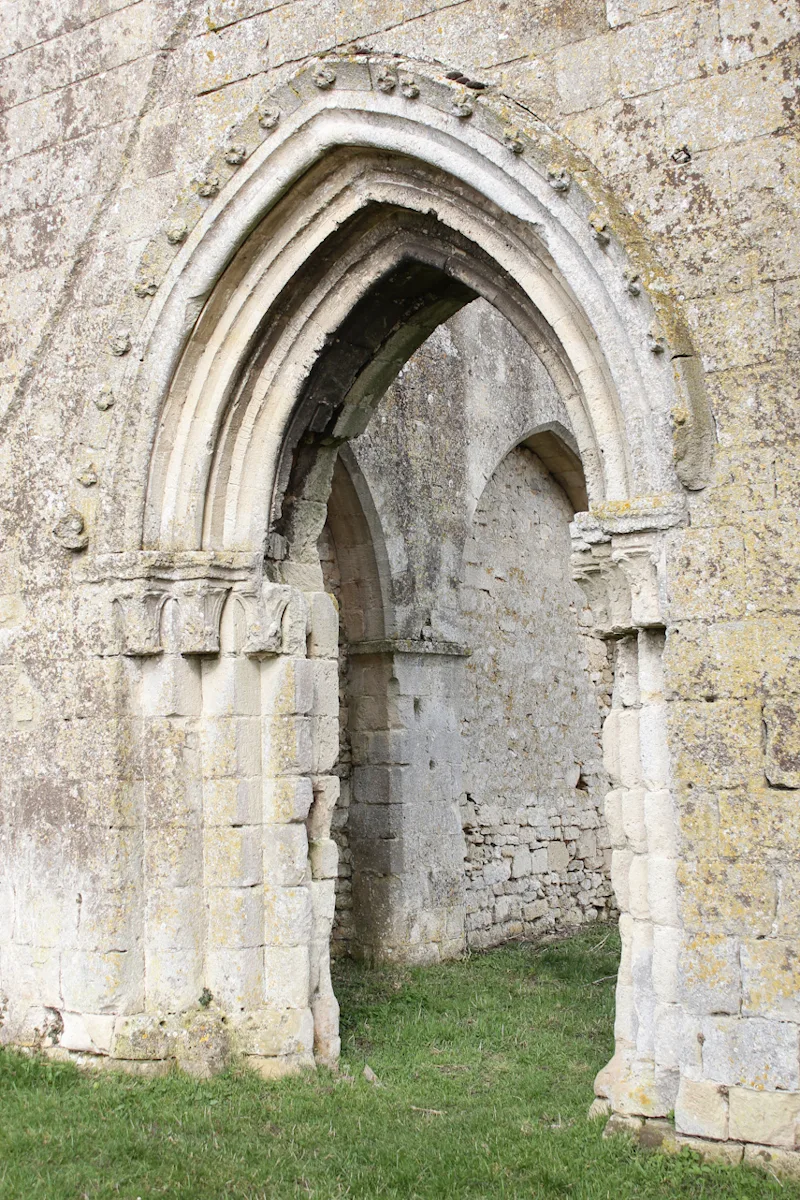
Despite centuries of destruction, the building retains some remarkable Romanesque features. Its Latin cross plan comprised a nave flanked by aisles, a projecting transept and a choir ending in a flat chevet. The eastern sections – chancel and transept – date from the late 11th century, and retain traces of barrel vaulting. The nave, rebuilt in the 12th century, features large pointed arches and a western portal adorned with sculpted archivolts, typical of the evolution towards the Gothic style.
An open-air heritage site
Owned by the Conseil départemental de l’Oise, Champlieu’s Romanesque chapel is freely accessible all year round. Explanatory panels and a digital trail give visitors a better understanding of the site’s history. Every year, guided tours and events are organized, particularly during the European Heritage Days, bringing the history and ancient skills of the site to life.